AI App Designers

Category: AI Development and design

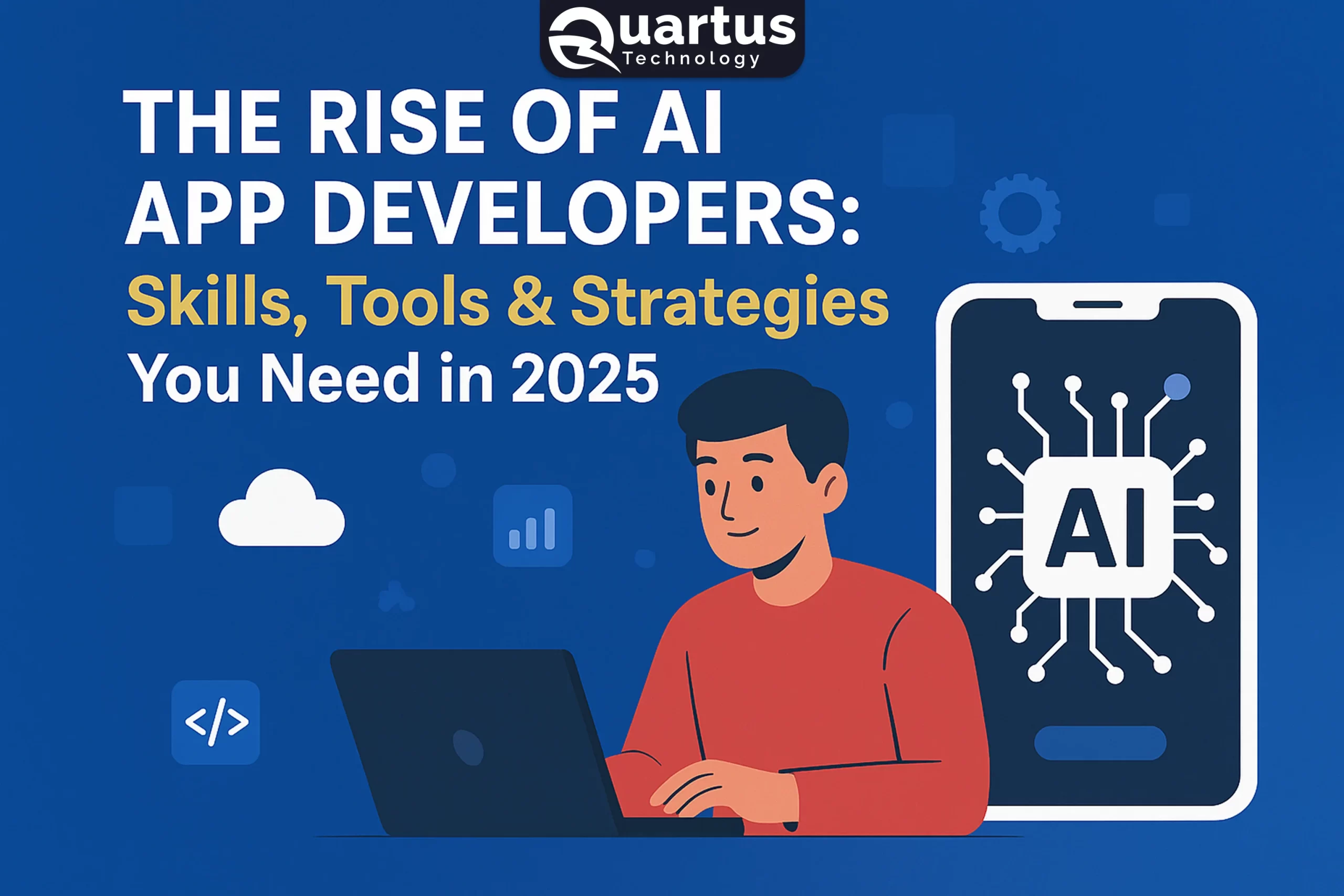
  • The Rise of AI App Developers: Skills, Tools & Strategies You Need in 2025

    The Rise of AI App Developers: Skills, Tools & Strategies You Need in 2025

    AI isn’t just a feature anymore — it’s becoming the foundation of modern digital products. From intelligent chatbots to personalized recommendation engines and predictive systems, businesses now expect apps to be “smart” by default. This shift has given rise to a new kind of builder: the AI App Developer.

    Whether you’re creating consumer apps, enterprise tools, or AI-powered SaaS platforms, mastering the AI development lifecycle is now essential. Here’s everything you need to know in 2025.


    Why AI App Developers Are in High Demand

    Every industry — healthcare, fintech, e-commerce, logistics, education — is integrating AI to deliver better experiences and automate decision-making.

    Companies need AI app developers for:

    • Predictive analytics (forecasting demand, churn, risks)
    • Smart automation (task automation, workflows)
    • Personalized user experiences (recommendation systems)
    • Conversational interfaces (chatbots, voice agents)
    • Vision-based AI (object detection, face recognition)
    • AI integrations inside mobile/ web apps

    The future belongs to developers who can build apps that think, learn, and adapt.


    🧠 Core Skills Every AI App Developer Needs in 2025

    1. Strong Foundation in Machine Learning & Deep Learning

    Even if using pretrained models, you must understand:

    • Model types (LLMs, CNNs, RNNs, transformers)
    • Training vs fine-tuning
    • Data preprocessing and evaluation
    • Frameworks like TensorFlow, PyTorch, ONNX

    2. App Development Expertise (Mobile or Web)

    AI is useless without solid application engineering:

    • Flutter, React Native, Swift, Kotlin (mobile)
    • Next.js, React, Vue (web)
    • Backend: Node.js, Python (FastAPI/Flask), Go

    3. Working With AI APIs & SDKs

    Modern apps often rely on:

    • OpenAI APIs
    • Google Vertex AI
    • AWS Bedrock
    • Hugging Face Inference
    • LangChain / LlamaIndex

    4. Prompt Engineering & Model Orchestration

    Developers must design:

    • Prompt templates
    • Memory flows
    • Agent workflows
    • Multi-model routing

    5. Data Engineering Basics

    AI systems depend on clean, organized data:

    • ETL workflows
    • Feature engineering
    • Vector databases (Pinecone, Weaviate, FAISS)
    • Data pipelines

    6. Security & Compliance

    Especially for enterprise AI apps:

    • End-to-end encryption
    • Cloud compliance (GDPR, HIPAA)
    • Secure API integration
    • User data anonymization

    🛠️ Must-Use Tools for AI App Development (2025 Edition)

    LLM & AI Model Platforms

    • OpenAI (GPT-5, GPT-o)
    • Anthropic Claude
    • Google Gemini
    • Meta Llama
    • Mistral AI

    AI Application Orchestration

    • LangChain
    • LlamaIndex
    • DSPy
    • Flowise / Low-code AI builders

    AI for Vision & Speech

    • OpenAI Vision API
    • Whisper & Whisper API
    • Google Speech-to-Text
    • Amazon Rekognition

    Deployment & Scalability

    • Docker + Kubernetes
    • AWS Lambda for serverless AI calls
    • Cloudflare Workers
    • Vercel AI SDK
    • Render/Fly.io for lightweight AI services

    ⚙️ AI App Development Workflow (Step-by-Step)

    1. Define the Problem

    • What user pain point requires intelligence?
    • What level of AI is needed? (chatbot, classification, recommendation, agent automation)

    2. Choose the Model

    • API-based LLM?
    • Fine-tuned model?
    • Custom-trained ML model?

    3. Architect the System

    • Client → Backend → Vector DB → LLM
    • Or edge AI running on-device (tflite, Core ML)

    4. Build the Core App

    • UI/UX
    • Authentication
    • API communication
    • Offline logic

    5. Integrate AI Features

    • Chat interface
    • AI agent workflows
    • Image understanding
    • Voice integration

    6. Optimize Costs

    • Use model caching
    • Switch to smaller models when possible
    • Rate-limit your own API

    7. Deploy & Monitor

    • Track latency, tokens, user interactions
    • Implement guardrails
    • Add feedback loops for continuous improvement

    🚀 Top AI App Ideas Thriving in 2025

    If you want inspiration, here are booming categories:

    • AI personal assistants
    • Industry-specific copilots (legal, medical, finance)
    • AI health & fitness trackers
    • Smart scheduling apps
    • Customer support chatbots
    • AI education tutors
    • Automated content creators
    • E-commerce AI recommendation engines
    • AI hiring & recruitment tools

    The market is expanding — fast.


    🧩 Challenges AI App Developers Face

    • Managing API costs
    • Controlling hallucinations
    • Ensuring data privacy compliance
    • Combining multiple AI models reliably
    • Handling high traffic + low latency
    • Keeping prompts from breaking with updates

    These challenges make AI app development a specialized career path.


    📈 The Future of AI App Development

    By 2026 and beyond:

    • On-device LLMs will become mainstream
    • AI agents will take over complex tasks automatically
    • Voice-first apps will dominate mobile UI
    • Every app will have some AI layer by default

    If you’re entering this field, the opportunity is massive.
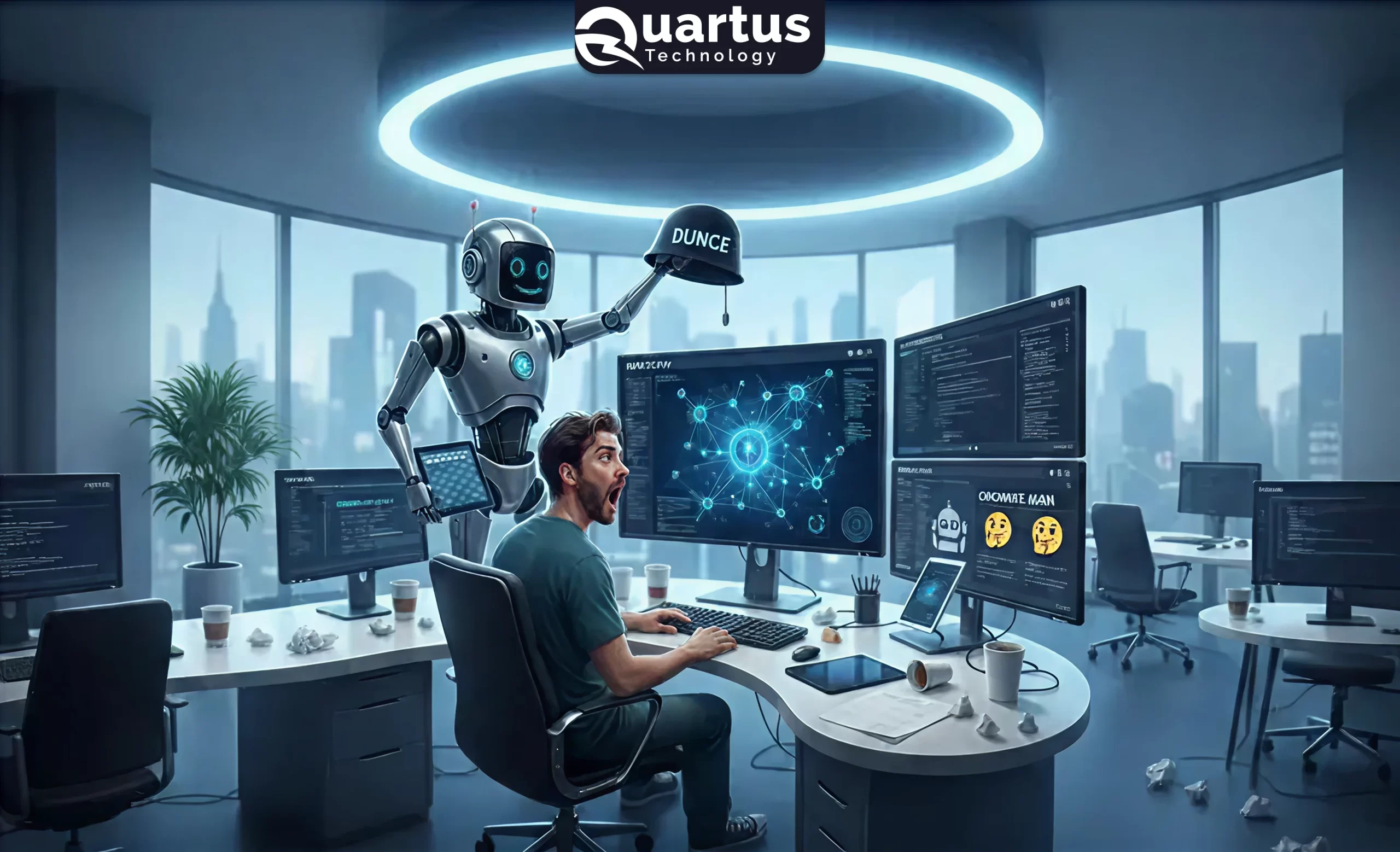
  • When Your AI App Becomes Smarter Than You: The Funny Side of AI App Development

    When Your AI App Becomes Smarter Than You: The Funny Side of AI App Development

    Let’s face it — developing AI apps used to sound cool and futuristic.
    Now? It’s a mix of caffeine, confusion, and your AI model giving you attitude.

    Welcome to AI App Development in 2025 — where your app might just roast you before it launches. 😂


    🧠 Step 1: “Training the Model” (or How to Teach a Genius That Doesn’t Listen)

    You start with high hopes — “I’ll train my AI to detect emotions!”

    Two hours later, it detects your frustration perfectly… but calls it happiness.
    Now your “emotion app” thinks every angry user is having a great time. 🙃

    Developers call this “AI Optimism.” The rest of us call it bug with confidence.


    🧩 Step 2: “AI, Explain Yourself!”

    Explainable AI sounds cool until your model actually tries to explain itself.

    “Why did you reject the user input, AI?”

    “Because I felt like it.”

    You built a moody teenager in Python. 😅


    💻 Step 3: The Debugging Olympics

    Debugging an AI model is like trying to find which grain of sand broke the beach.

    You stare at your screen, scrolling through logs like a digital archaeologist, muttering:

    “Somewhere… deep in this dataset… lies my mistake.”

    Spoiler: it’s a missing comma. Always is.


    ⚙️ Step 4: “Let’s Make It User-Friendly!”

    Your AI chatbot is ready. It’s fluent, smart, and helpful.

    Then a user types:

    “Hi.”

    And your AI replies:

    “I don’t understand your input.”

    Congratulations, you’ve created Clippy 2.0. 🎉


    🚀 Step 5: When the AI Actually Works

    That magical moment when your app finally works.

    It answers correctly. It predicts flawlessly. It even learns efficiently.

    You’re emotional. You’re proud. You whisper softly to your code:

    “You did it, my little neural network.”

    Then it crashes.
    Because the server ran out of memory. 😭


    🎭 Moral of the Story

    Building AI apps is like raising a child — they learn, they mess up, and sometimes they outsmart you.

    But that’s the fun part. Because when your AI app finally behaves,
    you realize you didn’t just build technology —
    you built digital personality with attitude.

    So here’s to every AI app designer out there,
    running experiments, breaking models, and occasionally asking,

    “Did my AI just… insult me?” 🤔😂


    #AIAppDeveloper #TechHumor #ArtificialIntelligence #DeveloperLife #FunnyCodingMoments #AIAppDesigner

  • AIAppDesigner: Where Imagination Meets Intelligent Design

    AIAppDesigner: Where Imagination Meets Intelligent Design

    Artificial Intelligence has changed how we work, think, and create — but at AIAppDesigner, we go one step further.
    We believe that design is not just about visuals; it’s about intelligence meeting imagination.
    Our mission is simple: to craft AI-powered applications that feel human, intuitive, and future-ready — where every pixel has purpose and every action has intelligence.


    Designing Beyond the Algorithm

    While most developers focus on how AI works, we focus on how it feels.
    At AIAppDesigner, design isn’t just a layer — it’s a language. We translate complex data into simple, elegant user experiences powered by machine learning and neural understanding.
    Our apps don’t just respond — they adapt, evolve, and anticipate user needs.


    Intelligent Experiences for the Modern World

    From AI-powered health trackers that learn from your habits to smart retail apps that understand your customers, AIAppDesigner is building digital ecosystems that think alongside humans.
    Each solution we craft merges:

    • Predictive intelligence – anticipating user intent.
    • Adaptive design – evolving interfaces that personalize themselves.
    • Emotion-aware UX – applications that respond to tone, mood, and context.

    Creativity + Code = Cognitive Design

    AIAppDesigner thrives at the intersection of art and algorithm.
    Our creative technologists, data scientists, and designers collaborate to shape a future where machines become co-creators.
    Whether you’re a startup envisioning the next-gen app or an enterprise reimagining your customer experience, we help you design intelligence that feels alive.


    The Future We’re Building

    Tomorrow’s apps will do more than perform tasks — they will understand emotion, purpose, and context.
    AIAppDesigner is leading this evolution, turning AI into a design partner that helps brands connect deeper, faster, and smarter.


    Conclusion

    Innovation isn’t about replacing humans — it’s about enhancing creativity through intelligence.
    At AIAppDesigner, we’re not just designing apps — we’re designing the future of human-AI collaboration.

    AIAppDesigner — Where Technology Learns to Create

  • BLE App Developers: Connecting Technology with Real Life

    BLE App Developers: Connecting Technology with Real Life

    In today’s connected world, our lives move at the speed of technology. From unlocking doors with a phone tap to tracking fitness goals with a smartwatch, Bluetooth Low Energy (BLE) makes these everyday miracles possible. It’s the invisible force that connects people, products, and possibilities — and behind it all stand the BLE App Developers, the real innovators turning imagination into reality.


    🔹 What Makes BLE So Revolutionary

    Bluetooth Low Energy (BLE) isn’t just another communication protocol — it’s a revolution in how devices interact with the physical world.

    Unlike traditional Bluetooth, BLE is designed for minimal power use and maximum efficiency, enabling devices to stay connected for months or even years on a single battery.

    Think about it — your smartwatch, fitness tracker, or wireless medical device doesn’t just work; it thinks, responds, and connects intelligently. That’s the magic of BLE.

    It’s the quiet technology that powers a smarter, faster, and more connected life.


    💡 The Real-World Impact of BLE App Developers

    BLE app developers are not just coders — they are architects of connected experiences.
    They design and build mobile apps that enable our devices to communicate, sense, and respond effortlessly.

    Imagine these real-world scenarios:

    • 👟 A fitness tracker syncing instantly with your phone after a workout — analyzing your heart rate and calories in real time.
    • 🏥 A patient monitor transmitting live health data to a doctor miles away — saving precious time and lives.
    • 🏠 A smart home app turning off lights automatically when you leave the room — conserving energy effortlessly.
    • 🏭 Industrial sensors sending predictive alerts to prevent machine breakdowns before they happen.

    All of these innovations are powered by BLE app development — a blend of creativity, precision, and connectivity.


    ⚙️ What BLE App Developers Actually Do

    Behind every smooth, intelligent connection, there’s a team of skilled developers making it happen.
    Here’s how they bring devices to life:

    • 🔗 Build seamless connections using GATT and GAP protocols
    • 🔋 Optimize apps for ultra-low power usage
    • 📶 Ensure fast pairing and stable communication
    • 🔒 Implement data encryption and security for safe transfers
    • 🧠 Design intuitive interfaces that make tech feel human
    • 📱 Develop apps for Android, iOS, and cross-platform frameworks

    They don’t just build software — they create bridges between people and technology.


    🌍 Industries BLE is Transforming

    BLE is no longer limited to wearables — it’s transforming how entire industries operate:

    • 🩺 Healthcare: Remote health tracking and connected medical devices are redefining patient care.
    • 🛍️ Retail: Beacons deliver personalized shopping experiences as customers move through stores.
    • 🏠 Smart Homes: BLE lets your devices sense your presence and respond automatically.
    • 🏭 Industrial IoT: Factories use BLE sensors for real-time equipment monitoring and safety.
    • 🧳 Logistics: BLE tags track shipments across the globe with pinpoint accuracy.

    From your wrist to your workplace — BLE technology is everywhere.


    🚀 Why Businesses Need Expert BLE App Developers

    To build connected products that people trust and love, you need experts who understand both technology and user experience.

    A skilled BLE developer ensures:

    • Reliable connections that never drop unexpectedly
    • 🧩 Hardware compatibility with different BLE devices and firmware
    • 🔋 Power-efficient design for long-lasting devices
    • 🔒 Security-first architecture to protect data integrity
    • 🌍 Cross-platform scalability for Android, iOS, and hybrid ecosystems

    In short — a professional BLE developer turns your idea into a real-world, reliable, and rewarding experience.


    💫 The Future: Where BLE Meets AI and IoT

    The next wave of innovation will be powered by the combination of BLE, AI, and IoT.
    Imagine a world where devices don’t just connect — they learn from you, adapt to your habits, and make decisions intelligently.

    BLE developers are already building that future — a world where your car unlocks automatically, your office adjusts to your mood, and your city becomes smarter every day.


    🌐 Conclusion: Building a Smarter, More Connected World

    The role of a BLE App Developer goes far beyond technology.
    They’re shaping how we live, work, and connect — one smart interaction at a time.

    BLE isn’t just powering devices; it’s empowering people.
    It’s turning ordinary moments into extraordinary experiences.

    And as the world moves deeper into the era of smart connectivity, BLE developers will continue to lead the way — transforming imagination into innovation.